Redesigning a Jewellery Store in Lucknow: What Changed, Measured
In short
I measured a Lucknow jewellery brand's current Shopify home page and my redesign proposal on the same phone profile: 186 requests and ~4.7 MB of JavaScript against 8 requests and ~71 KB — plus a real H1 and richer structured data. Here's what that means, and what it doesn't.
ZHOME is a Lucknow brand selling one gram gold and anti-tarnish jewellery online across India. Its store, zhome.in, runs on a Shopify theme and works — orders come in. I built a redesign proposal and, instead of just saying it's “faster and better for SEO”, measured both home pages the same way: same phone profile, five seconds after load, on 8 October 2026. The client is deciding. Here's what the numbers show, the fair caveats, and the lessons for any jewellery store.
The numbers
Home page, phone profile, five seconds after load:
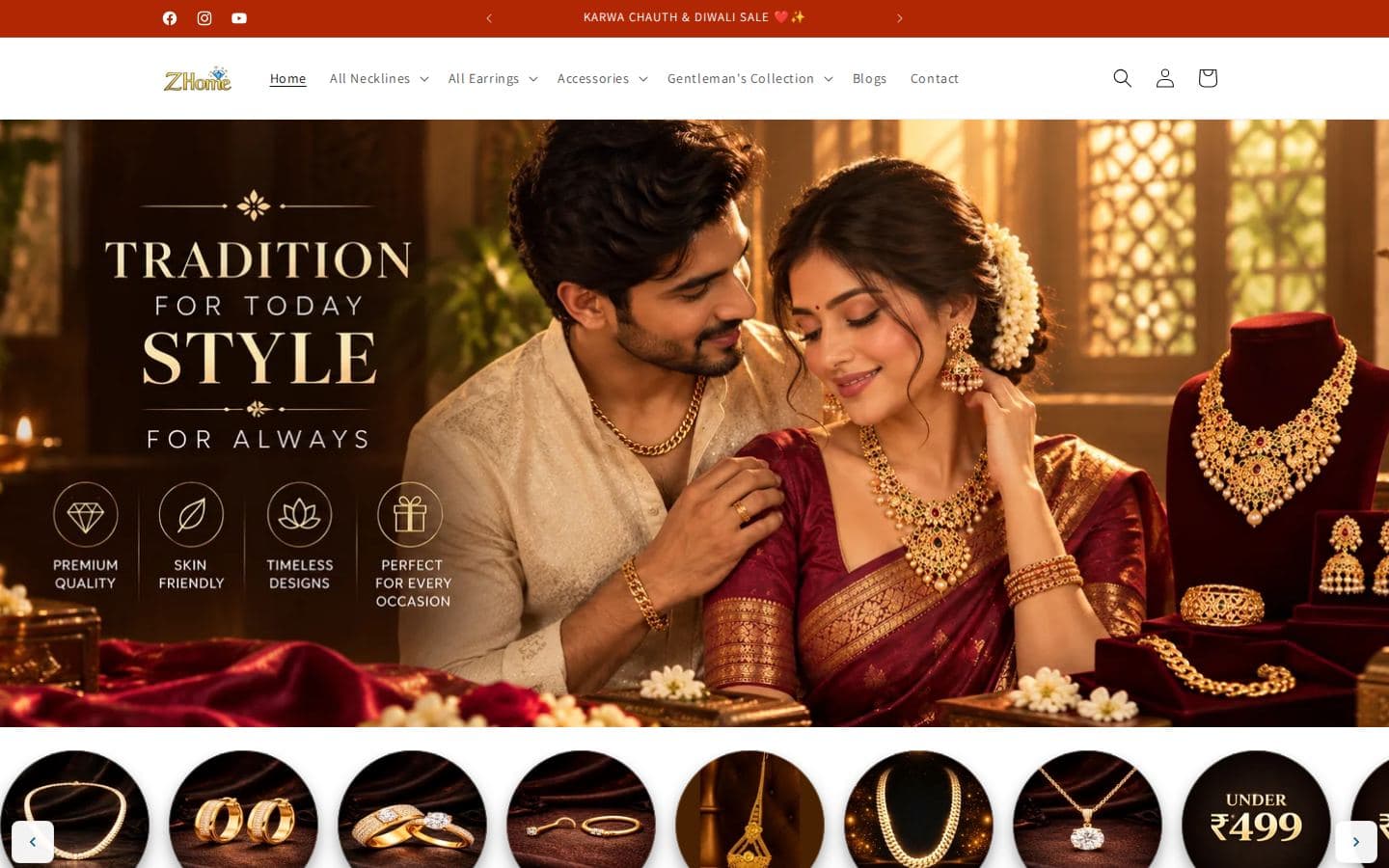
- JavaScript: about 4.7 MB → about 71 KB.
- Network requests: 186 → 8.
- Outside services loaded: 12 → 2.
- H1 heading: empty → “One Gram Gold & Anti-Tarnish Jewellery Online in India”.
- Structured data types: Organization and WebSite → plus OnlineStore and FAQPage.
The fair caveat
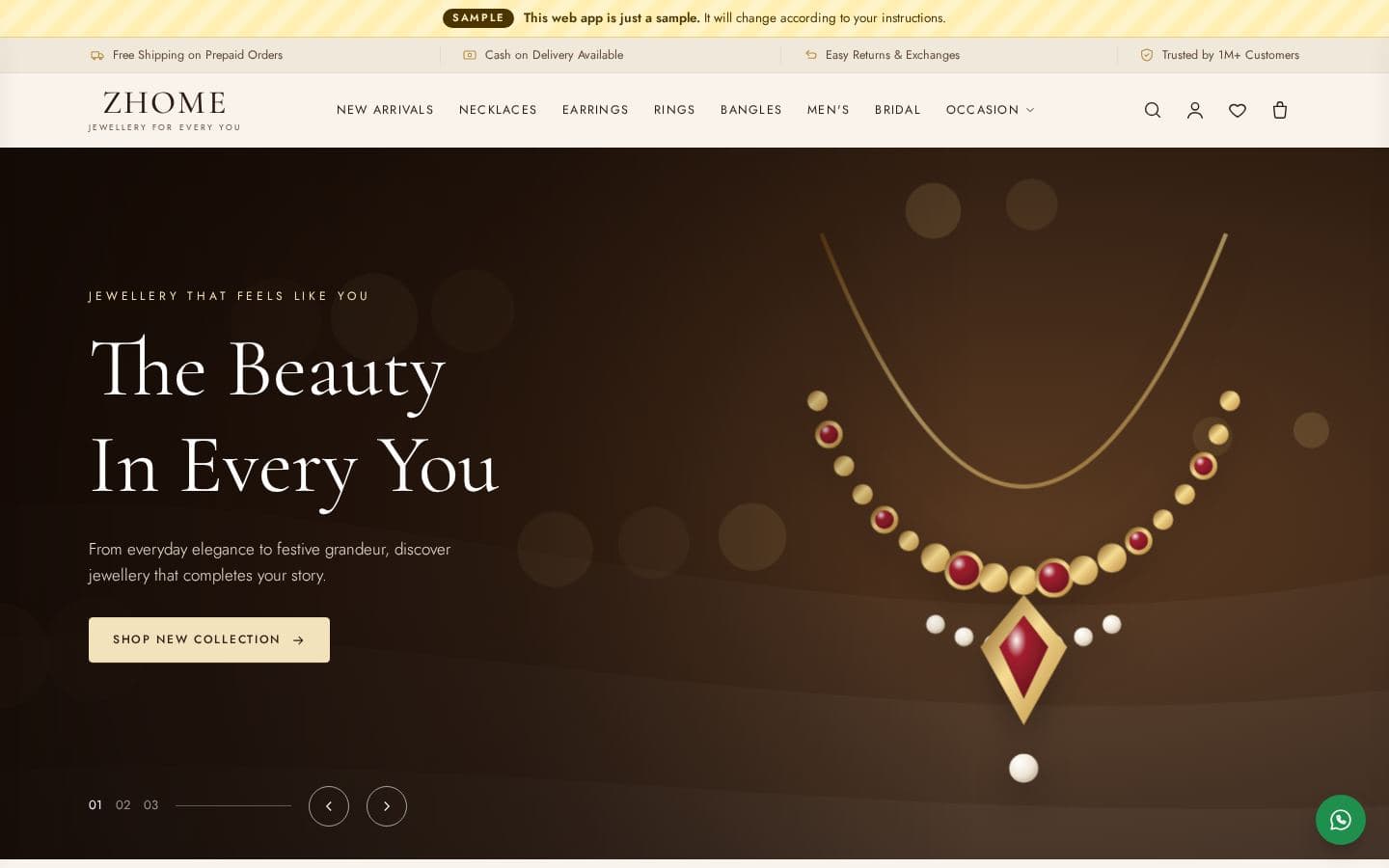
My proposal uses drawn jewellery illustrations where the live store shows real product photos, so real photos will add image weight. The gap in JavaScript, requests and outside services doesn't come from images, though — it comes from the theme, the installed apps and the trackers each loading their own scripts. That's the part a rebuild removes.
Why so much JavaScript?
On most Shopify stores, every app — reviews, pop-ups, wishlists, chat, upsells, analytics — adds its own script to every page. Each one is small; twelve of them on a mid-range phone on a 4G connection are not. Google's own guidance is to load third-party scripts carefully and only where they're needed.
The proposal builds the few features a jewellery shopper actually uses — wishlist, bag, WhatsApp, collections — into the store itself.
Search: say what you sell
The current home page's H1 is empty, so the most important heading on the page tells Google nothing. The proposal's title, H1 and description name the product (one gram gold, anti-tarnish), the city (Lucknow), the price point (from ₹299) and COD — the words customers type.
Structured data adds the brand's Lucknow address to its Organization block, an OnlineStore with payments and returns, a website search box and an FAQ — the details AI assistants and Google pull into answers.
Built for shopping on a phone
Jewellery is bought on phones, often from Instagram and Facebook. The proposal keeps a bottom bar for Home, Shop, Wishlist and Bag, a WhatsApp button, and collections by occasion — bridal, festive, wedding, everyday, gifts — next to the usual categories, men's jewellery and chikan wear.
For Meta ads, the Meta Pixel and product catalogue should stay connected through any switch, so Instagram shopping and retargeting keep working.
Lessons for any jewellery store
- Audit your apps: remove any you don't actively use.
- Make sure your home page H1 names what you sell.
- Add Organization (with address), OnlineStore and product structured data.
- Design for the phone first — bottom navigation and WhatsApp within thumb reach.
- Let the brand carry the design, and let sales sit on top of it.
Frequently Asked Questions
Is Shopify slow?
Not by itself — but themes plus many installed apps can load several megabytes of JavaScript. Removing unused apps and building key features into the store helps most.
What should a jewellery store's H1 say?
What you sell, in the words customers search — for example “One Gram Gold & Anti-Tarnish Jewellery Online in India”.
Were the numbers measured fairly?
Both home pages were measured on the same phone profile, five seconds after load, on the same day. The proposal uses illustrations instead of product photos, which is noted in the case study.
Key Takeaways
- Measure before and after the same way, and state the caveats.
- Most of a heavy store's weight is apps and trackers, not photos.
- An empty H1 is a free SEO fix.
- Organization, OnlineStore and product structured data help Google and AI answers.
Sources & further reading
- Understanding page experience in Google Search — Google Search Central
- Web Vitals — web.dev
- Efficiently load third-party JavaScript — web.dev (Google)
- SEO best practices for ecommerce sites — Google Search Central
- Merchant listing structured data — Google Search Central
- Organization structured data — Google Search Central
- Learn about Meta Pixel — Meta Business Help Center
- Ecommerce SEO guide — Shopify
Related work
Keep reading
Have a project that touches e-commerce?
Get in touch