How Long Does It Take to Build a Website? Day-by-Day Timeline
In short
A typical business website is live in about 10–11 days with me: a reply within 12–24 hours, a free sample design on day 3, then 5–6 days of development and testing. Here's the day-by-day plan, and why portals and web apps take longer.
“Kitne din lagenge?” comes right after the price question, usually because there's a reason: a launch, a season, an admission window. For a typical business website the honest answer is about 10–11 days from your first message to a live site. Here's exactly what happens on each day, what you need to give me so it doesn't slip, and why a portal or web app is a different timeline.
The day-by-day plan
This is the same plan I follow for every website, and it's on my services page so you can hold me to it:
- Within 12–24 hours — I reply to your enquiry.
- Day 2 — we talk through your business, pages and goals.
- Day 3 — you get a free sample design.
- Day 4 — your feedback and approval.
- Day 5 — we confirm scope, price and timeline; you pay the 30% advance.
- Next 5–6 days — development and testing.
- Live — with lifetime support and free bug fixing.
What decides whether it's 10 days or 20
Most delays aren't development; they're waiting. The fastest projects are the ones where the logo, photos, service list, prices and contact details arrive on day 2. If text has to be written from scratch or translated into Gujarati or Hindi, add a few days — and tell me early, so I can plan for it.
Feedback is the other lever. One clear round of changes keeps the plan; five small rounds spread over a week don't.
A website on the standard timeline
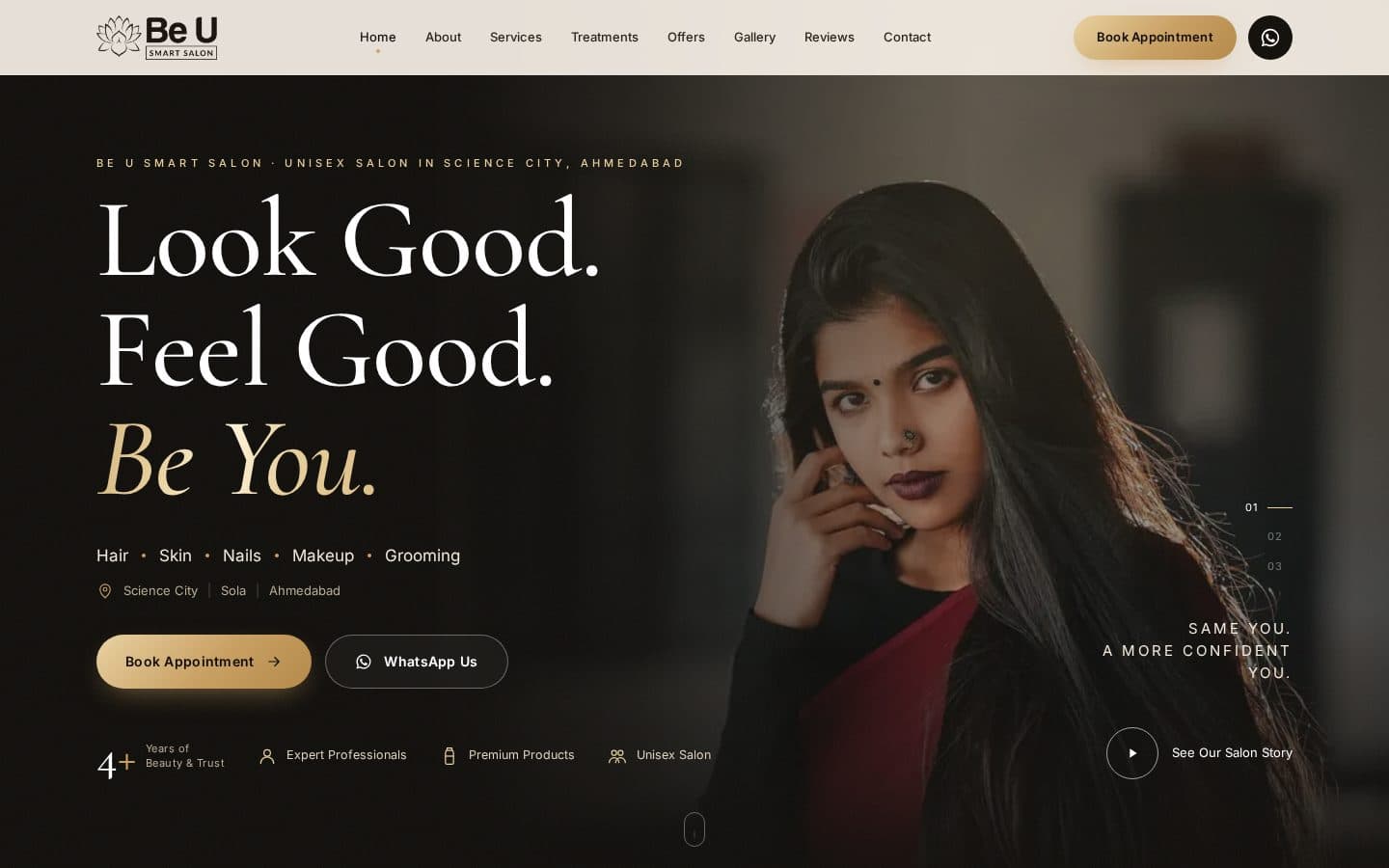
Be U Smart Salon in Science City, Ahmedabad is a standard business website: services, offers, WhatsApp booking and local SEO. I built it alone and delivered it on 28 September 2026.
Why portals and web apps take longer
Software with logins, records and an admin panel is built in modules, and each module is tested on its own. I tell clients the timeline per module instead of pretending it's a 10-day website:
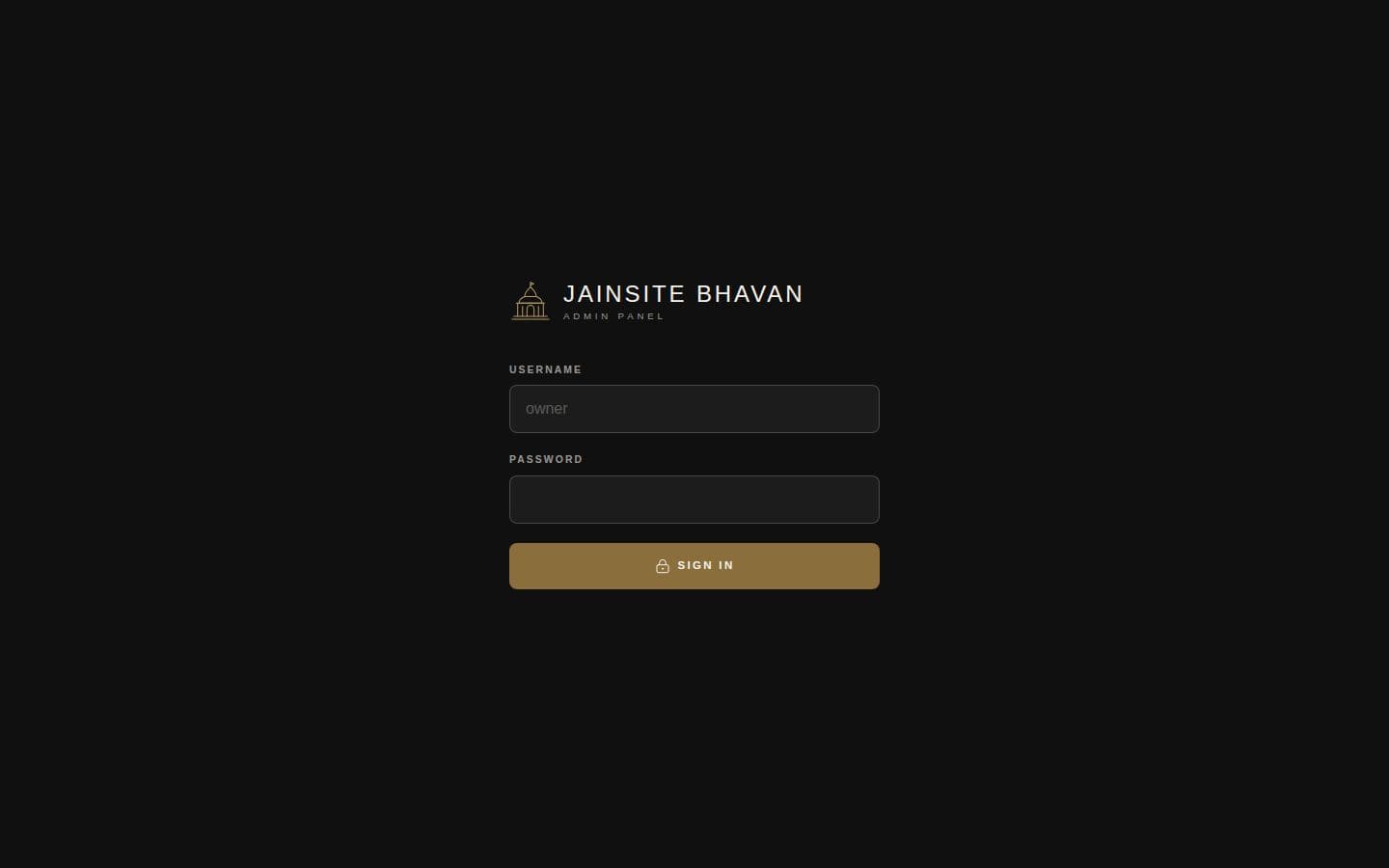
- Jainsite Bhavan Palitana — a hotel management system with rooms, stay enquiries and an admin panel; about 60% done.
- Khadayata Yuva Samaj, Nadiad — a community web app with a matrimonial system, membership, donations and events; corrections in progress.
- Chaitanya Public School, Rayagada — a public website plus a portal with admin, teacher, student and parent logins; the back end is being built.
Redesigns: speed without losing Google
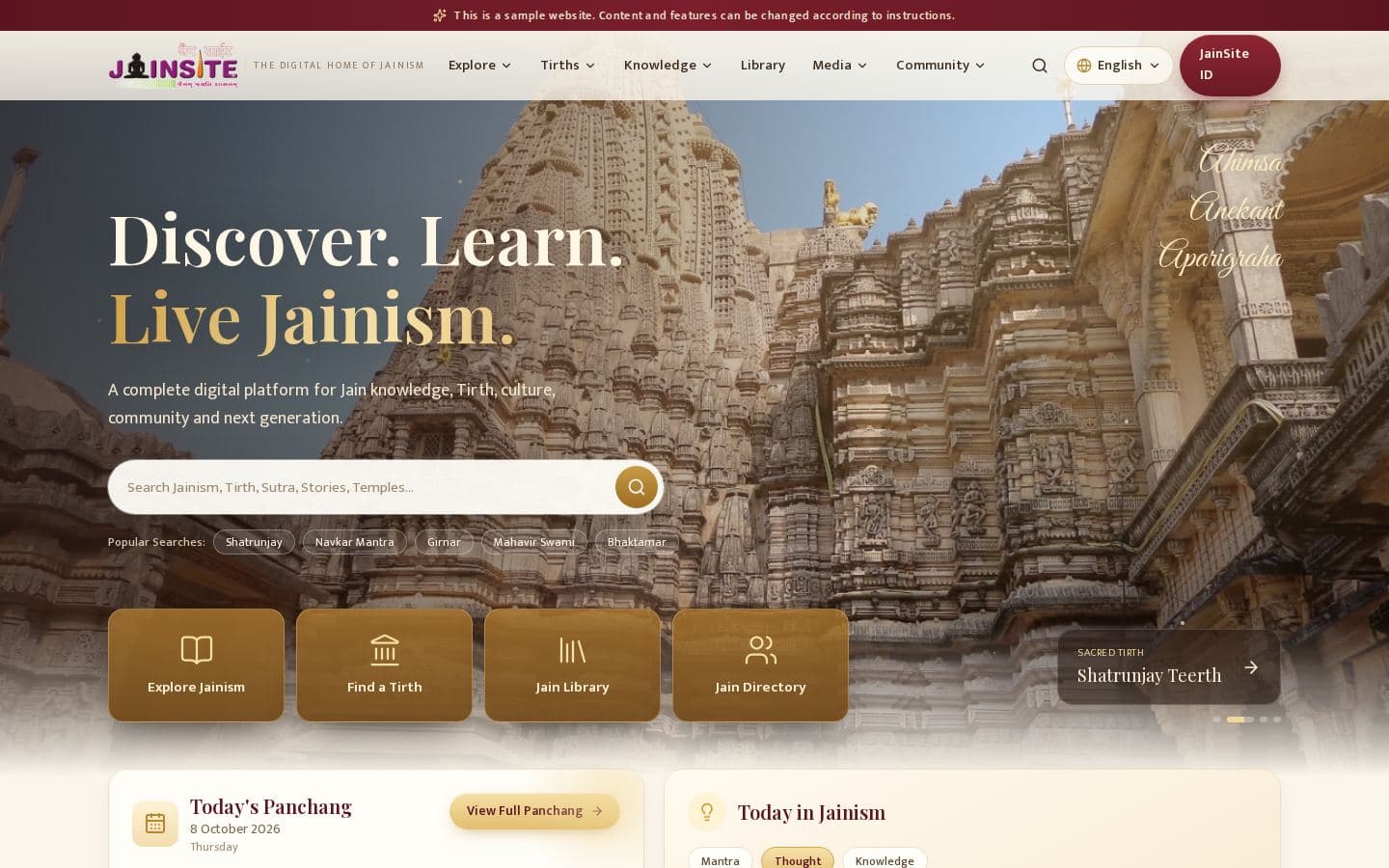
A redesign can be as quick as a new site, but moving an existing site has one extra job: every old URL must keep working. On the JainSite redesign, old URLs redirect to their new pages so existing Google rankings and inbound links carry over. That step is planned into the timeline, never skipped to save a day.
Frequently Asked Questions
How long does it take to build a business website?
About 10–11 days for a typical website: a reply within 12–24 hours, a free sample on day 3, approval on day 4, confirmation on day 5, then 5–6 days of development and testing.
What slows a website project down?
Waiting for content — logo, photos, prices, text — and feedback spread over many small rounds. Sending everything on day 2 and giving one clear round of changes keeps it on time.
How long does a portal or web app take?
Longer than a website, because it's built and tested module by module. I give you a timeline per module before we start.
Key Takeaways
- A typical website goes live in about 10–11 days.
- Content on day 2 and one clear feedback round keep it on schedule.
- Portals and web apps are planned module by module.
- Redesigns include redirects for every old URL — that time is never skipped.
Sources & further reading
- SEO Starter Guide — Google Search Central
- Site moves and migrations — Google Search Central
- Redirects and Google Search — Google Search Central
- Mobile site and mobile-first indexing best practices — Google Search Central
- Web Vitals — web.dev
Related work
- Be U Smart SalonWebsite · Meta Ads · SEO / AEO / GEO
- Jainsite Bhavan PalitanaHotel Management System · Public Website · Stay Enquiries & Admin
- Khadayata Yuva Samaj, NadiadCommunity Web App · Matrimonial System · Membership & Donations · Gujarati & English
- Chaitanya Public SchoolSchool Website · School Portal · Admin, Teacher, Student & Parent Logins
- JainSiteWebsite Redesign · Custom CMS (not WordPress) · 3 Languages · 4,800+ Articles Migrated
Keep reading
Have a project that touches website redesign? See Website rebuild & redesign.
Get in touch